



The evolving role of DICOM in digital pathology

Updated Date: 25 August 2026
This is a summary of the full-text article by Cornish et al., which can be accessed at
https://www.sciencedirect.com/science/article/pii/S2153353926001161
Published in JPI on 30 April 2026
Overview
- Digital Imaging and Communications in Medicine (DICOM) is a global standard that is used for interpreting digital images without the need to use proprietary vendor-specific images
- More than 90% of the medical images in radiology are exchanged using DICOM
- The need for DICOM use in digital pathology has increased due to the requirement for a more streamlined vendor-neutral data exchange
- In 2024, Leica Biosystems, through Aperio GT 450 DX scanner, became the first company to get FDA approval to produce native DICOM images
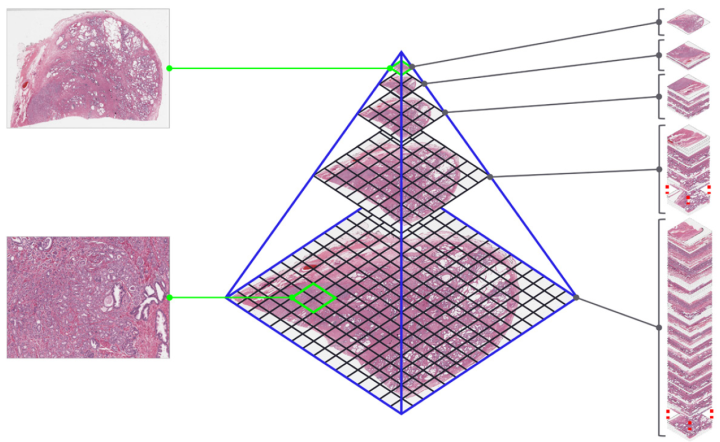
- A DICOM whole slide image (WSI) is stored as a pyramidical structure
- A WSI is stored in a multilevel, multiresolution form
- Each level’s image resolution is divided into sub-regions or tiles
- Each tile represents an image frame
- Each frame/tile can be retrieved by the user, enabling efficient navigation
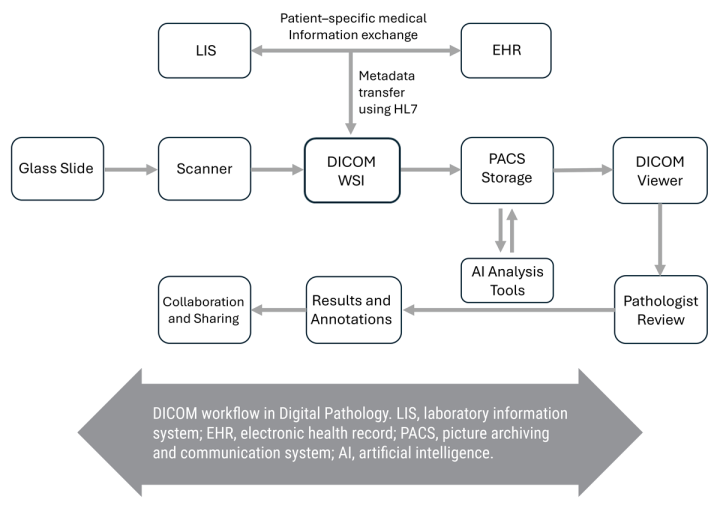
Increased Interoperability
To encourage adoption and interoperability, Leica Biosystems has chosen not to enforce restrictions on its patented DICOM compliant imaging module.
Enhanced Collaboration
DICOM implementation allows for greater collaboration among pathologists.
Embeds with Computational Pathology
DICOM facilitates AI annotation and supports digital pathology and computation pathology integration.
Challenges
- A survey study reported only 11% (16/137) users utilizing DICOM, suggesting low adoption of this file format.
- Only a handful of scanners supporting native DICOM output.
Opportunities
- Growing pathologist interest in implementing this new technology for ease of information exchange.
- Uptick in approval of DICOM-compliant digital pathology scanners.
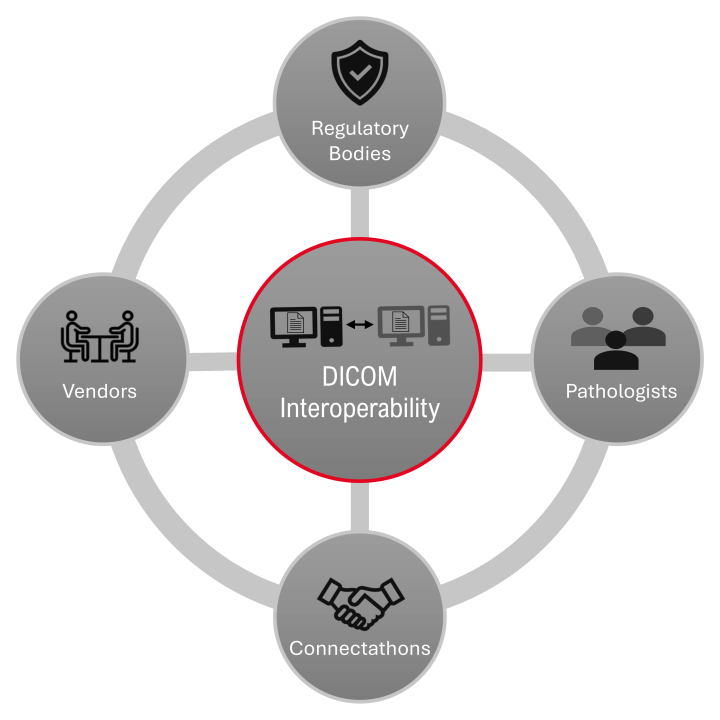
Leica Biosystems is helping shape the official policy for DICOM implementation by being a part of working groups, connectathons, and conferences.
Learn More Download Article (PDF)
Concerted effort is needed by the stakeholders for increased awareness of DICOM in digital pathology, which may lead to accurate and quicker case diagnosis turnaround time, thereby improving patient care.
About the presenter
Shubham Dayal is a Senior Medical Writer at Leica Biosystems and has over 10 years of experience in regulatory/preclinical/clinical writing for studies that are at different stages of the product lifecycle. Shubham has a PhD in Cell and Molecular Biology from the University of Toledo and a Master's in Regulatory Affairs from Northeastern University and has co-authored multiple peer-reviewed articles and poster presentations. He is an active member of the Regulatory Affairs Professional Society and American Medical Writers Association and holds certifications related to scientific writing. In his current role, Shubham's goal is to create awareness for our customers in ways that can advance scientific communication and ultimately improve patient outcomes.
Related Content


Die Inhalte des Knowledge Pathway von Leica Biosystems unterliegen den Nutzungsbedingungen der Website von Leica Biosystems, die hier eingesehen werden können: Rechtlicher Hinweis. Der Inhalt, einschließlich der Webinare, Schulungspräsentationen und ähnlicher Materialien, soll allgemeine Informationen zu bestimmten Themen liefern, die für medizinische Fachkräfte von Interesse sind. Er soll explizit nicht der medizinischen, behördlichen oder rechtlichen Beratung dienen und kann diese auch nicht ersetzen. Die Ansichten und Meinungen, die in Inhalten Dritter zum Ausdruck gebracht werden, spiegeln die persönlichen Auffassungen der Sprecher/Autoren wider und decken sich nicht notwendigerweise mit denen von Leica Biosystems, seinen Mitarbeitern oder Vertretern. Jegliche in den Inhalten enthaltene Links, die auf Quellen oder Inhalte Dritter verweisen, werden lediglich aus Gründen Ihrer Annehmlichkeit zur Verfügung gestellt.
Vor dem Gebrauch sollten die Produktinformationen, Beilagen und Bedienungsanleitungen der jeweiligen Medikamente und Geräte konsultiert werden.
Copyright © 2026 Leica Biosystems division of Leica Microsystems, Inc. and its Leica Biosystems affiliates. All rights reserved. LEICA and the Leica Logo are registered trademarks of Leica Microsystems IR GmbH.