







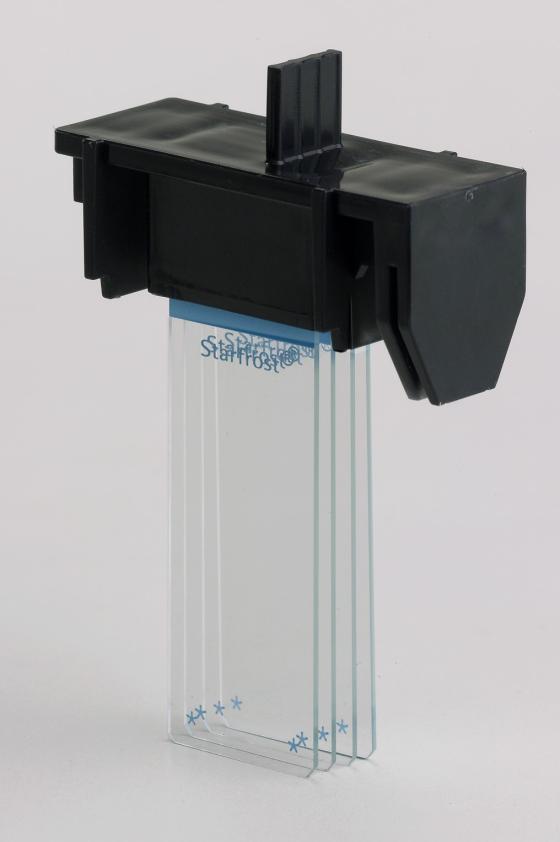
Leica ST4020 Piccolo coloratore lineare
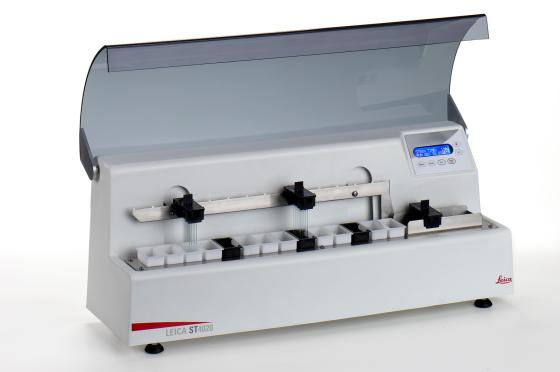
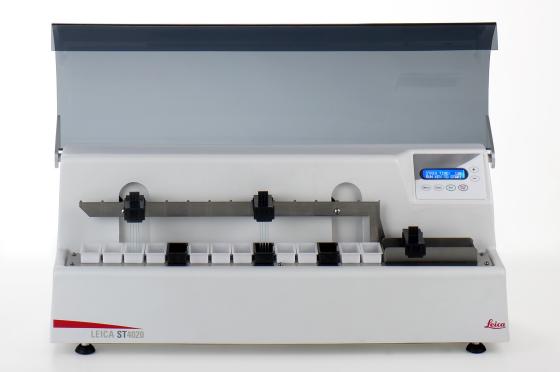
Il piccolo coloratore lineare Leica ST4020 garantisce qualità grazie al design compatto.
Il coloratore lineare Leica ST4020 unisce le funzioni del software di programmazione di un grande coloratore lineare ad un design compatto. Grazie all'automazione avanzata, il Leica ST4020 offre all'utilizzatore la libertà di avviare il ciclo e dedicarsi ad altre attività urgenti.
La programmazione flessibile rende il Leica ST4020 ideale per molti tipi di campioni. Scegliete il coloratore Leica ST4020 quando avete bisogno di avviare un ciclo per campioni cutanei (campioni Mohs), sezioni congelate, aghi aspirati e biopsie!
Specifiche del prodotto
| Larghezza : | 62 cm (24,5") |
| Profondità: | 20 cm (8) |
| Altezza: | 25 cm (10") |
| Altezza libera: | 47 cm (18,2") |
| Peso: | 16 kg (35 libbre) |
| Tempo di colorazione : | 2 - 300 secondi per ogni stazione |
| Agitazione : | 0 - 3 immersioni |
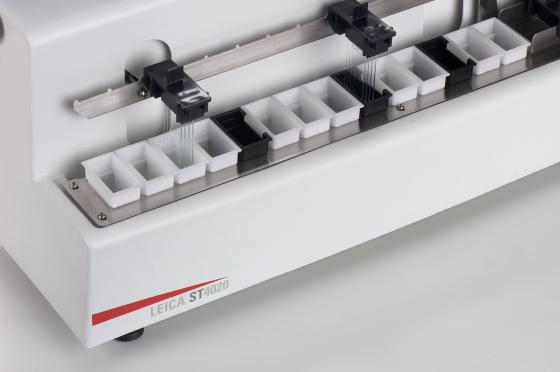
| Numero stazioni di reagenti : | 14 |
| Tempo di colorazione : | 2 - 300 secondi per ogni stazione |
| Capacità serbatoio di uscita : | 4 portavetrini |
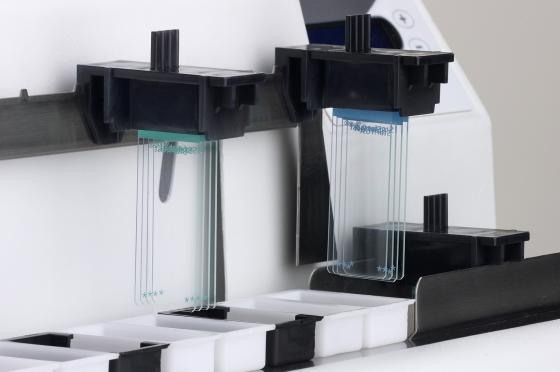
| Capacità portavetrini : | 4 vetrini |
| Volume flacone di reagente : | 50 ml |
| Numero stazioni di lavaggio : | fino a 3 |
Per saperne di più
Risparmia denaro e garantisce la qualità
Grazie ai bassi consumi di reagente, il coloratore lineare Leica ST4020 consente al laboratorio di ridurre gli sprechi e i costi dei reagenti. La funzione di agitazione facoltativa, l’uso di acqua corrente e i protocolli personalizzabili garantiscono una qualità diagnostica costante.
Gestite il carico di lavoro del laboratorio
Vetrini multipli per ciclo (da 1 a 4), una produttività massima di oltre 400 vetrini all’ora e un serbatoio di uscita da 16 vetrini aiutano gli operatori a gestire i diversi carichi di lavoro giornalieri.
Adatto a qualsiasi laboratorio
Grazie alle dimensioni compatte, è abbastanza piccolo da essere collocato vicino al criostato per gestire anche i campioni più urgenti.
Garantisce versatilità e autonomia
Il Leica ST4020 si adatta facilmente a un'ampia gamma di flussi di laboratorio con funzioni flessibili, tra cui una posizione iniziale di protocollo variabile, tre stazioni d’acqua corrente opzionali e un tempo programmabile per stazione da 2 a 300 secondi.
Pensa in modo agile e sicuro
Accelera i tempi di esecuzione con caricamento continuo e notifica udibile di fine protocollo.
Scarica

Manuali d’uso/ Istruzioni d’uso
 Leica ST4020 IFU 1v3J cs
Size: 1.79 MB,
Tipo: pdf
Leica ST4020 IFU 1v3J da
Size: 1.79 MB,
Tipo: pdf
Leica ST4020 IFU 1v3J de
Size: 1.8 MB,
Tipo: pdf
Leica ST4020 IFU 1v3J en
Size: 1.79 MB,
Tipo: pdf
Leica ST4020 IFU 1v3J uk
Size: 1.83 MB,
Tipo: pdf
Leica ST4020 IFU 1v3J es
Size: 1.59 MB,
Tipo: pdf
Leica ST4020 IFU 1v3J fr
Size: 1.8 MB,
Tipo: pdf
Leica ST4020 IFU 1v3J it
Size: 1.81 MB,
Tipo: pdf
Leica ST4020 IFU 1v3J ja
Size: 2.07 MB,
Tipo: pdf
Leica ST4020 IFU 1v3J nl
Size: 1.8 MB,
Tipo: pdf
Leica ST4020 IFU 1v3J pt
Size: 1.8 MB,
Tipo: pdf
Leica ST4020 IFU 1v3J ru
Size: 1.84 MB,
Tipo: pdf
Leica ST4020 IFU 1v3J sv
Size: 1.59 MB,
Tipo: pdf
Leica ST4020 IFU 1v4K zh
Size: 2.58 MB,
Tipo: pdf
Leica ST4020 IFU 1v3J sr
Size: 1.58 MB,
Tipo: pdf
Leica ST4020 IFU 1v3J kk
Size: 1.84 MB,
Tipo: pdf
Leica ST4020 IFU 1v3J ko
Size: 2.08 MB,
Tipo: pdf
Leica ST4020 IFU 1v3J cs
Size: 1.79 MB,
Tipo: pdf
Leica ST4020 IFU 1v3J da
Size: 1.79 MB,
Tipo: pdf
Leica ST4020 IFU 1v3J de
Size: 1.8 MB,
Tipo: pdf
Leica ST4020 IFU 1v3J en
Size: 1.79 MB,
Tipo: pdf
Leica ST4020 IFU 1v3J uk
Size: 1.83 MB,
Tipo: pdf
Leica ST4020 IFU 1v3J es
Size: 1.59 MB,
Tipo: pdf
Leica ST4020 IFU 1v3J fr
Size: 1.8 MB,
Tipo: pdf
Leica ST4020 IFU 1v3J it
Size: 1.81 MB,
Tipo: pdf
Leica ST4020 IFU 1v3J ja
Size: 2.07 MB,
Tipo: pdf
Leica ST4020 IFU 1v3J nl
Size: 1.8 MB,
Tipo: pdf
Leica ST4020 IFU 1v3J pt
Size: 1.8 MB,
Tipo: pdf
Leica ST4020 IFU 1v3J ru
Size: 1.84 MB,
Tipo: pdf
Leica ST4020 IFU 1v3J sv
Size: 1.59 MB,
Tipo: pdf
Leica ST4020 IFU 1v4K zh
Size: 2.58 MB,
Tipo: pdf
Leica ST4020 IFU 1v3J sr
Size: 1.58 MB,
Tipo: pdf
Leica ST4020 IFU 1v3J kk
Size: 1.84 MB,
Tipo: pdf
Leica ST4020 IFU 1v3J ko
Size: 2.08 MB,
Tipo: pdf
Flyer
95.9091 Flyer ST4020 EN
Size: 459.36 KB,
Tipo: pdf
210157 Flyer ST4020 DE
Size: 871.84 KB,
Tipo: pdf
210158 Flyer ST4020 FR
Size: 870.71 KB,
Tipo: pdf
210159 Flyer ST4020 IT
Size: 863.59 KB,
Tipo: pdf
210160 Flyer ST4020 ES
Size: 868.17 KB,
Tipo: pdf
210161 Flyer ST4020 PT
Size: 868.52 KB,
Tipo: pdf
210162 Flyer ST4020 ZH
Size: 928.14 KB,
Tipo: pdf
210163 Flyer ST4020 JP
Size: 928.35 KB,
Tipo: pdf
Certificati
DoC Leica ST4020 D
Size: 384.73 KB,
Tipo: pdf